
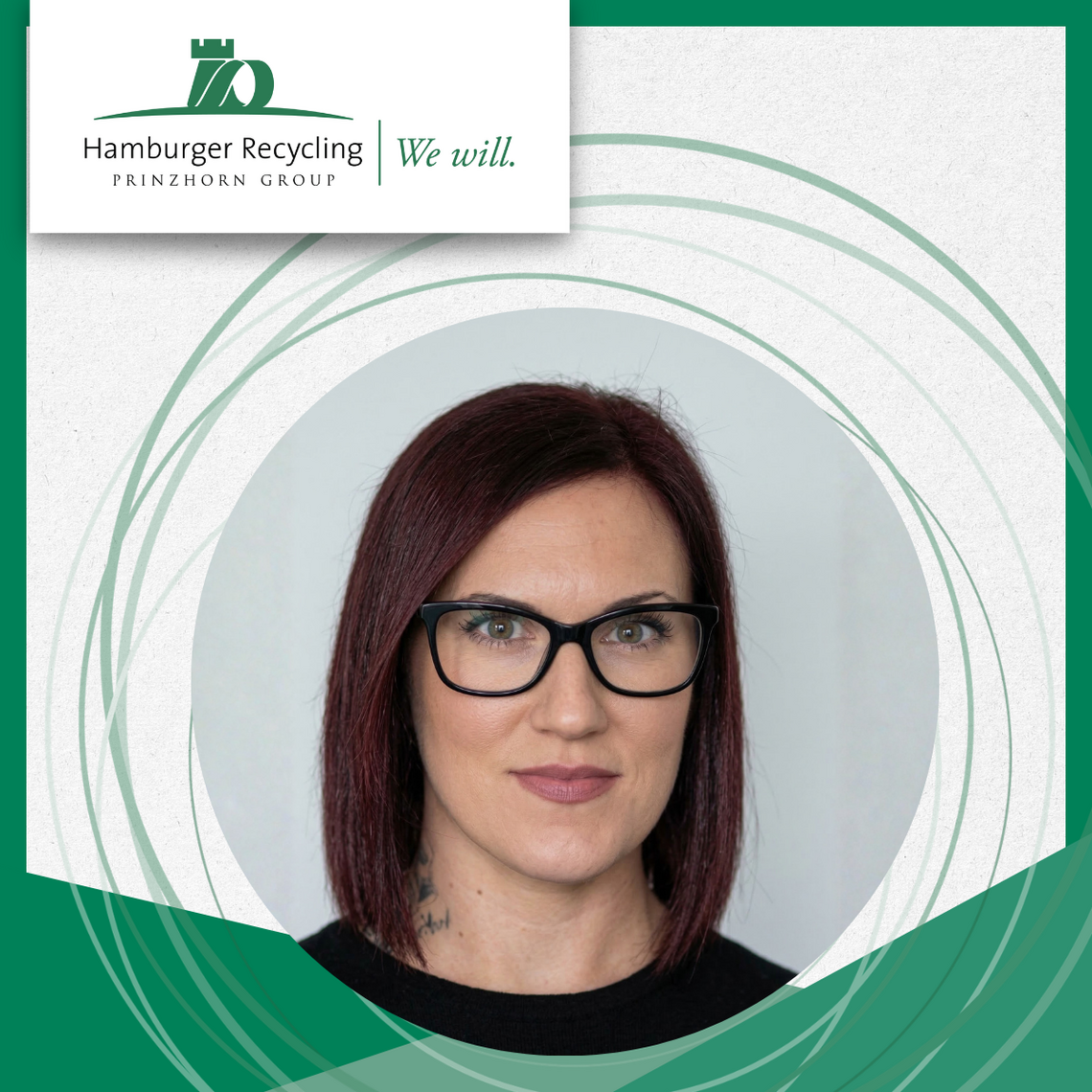
Career changes usually happen within the same orbit: one company to another, one role to a slightly bigger one. Much more rarely, someone steps into a completely different world.
For Kristina Trampuš Šahinović, Managing Director at Hamburger Recycling Adria d.o.o., that shift meant leaving a 14-year career in the Slovenian police and entering the recycling industry, a sector defined by logistics, materials markets, environmental policy, and circular-economy ambitions. Which is why we came to Slovenia with many words of praise, and of course - questions.
Kristina, your career path was not very predictable.
- My journey into the recycling industry happened quite unexpectedly. Before entering this sector, I spent 14 years working with the Slovenian police, which was a completely different professional environment. Coming to Hamburger Recycling was less of a career change and more of a complete professional reset in a completely new industry - a reset I loved so much!
Entering the recycling sector from the outside, what was the first realization?
The very first realization was the sheer complexity of the whole system. From the outside, recycling often looks simple: collect materials, process them, reuse them. Inside the industry, however, every material has its own value chain, market dynamics, and processing requirements. Paper, plastics, metals, and cardboard each follow a different path through the circular economy.
For me, learning this ecosystem meant understanding not only the technical side of recycling, but also the operational and commercial relationships behind it. Municipal systems, industrial partners, logistics networks, and market prices all influence how materials move through the system. I built trust from the ground up, especially with partners who already had long-standing cooperation with the company. Looking back, it has been a demanding but very rewarding professional transition. With time, the unfamiliar began to reveal its logic.
Is the recycling industry what you thought it was?
No, it's actually funny that the recycling industry is so often misunderstood. Many people still associate recycling with waste disposal. In reality, it sits much closer to industrial supply chains and resource management.
Recycling companies operate at the intersection of environmental policy, global commodity markets, and manufacturing demand for secondary raw materials.
“Recycling is not only about waste management — it is a key pillar of the circular economy and an important part of building a more sustainable future.”
Do you see this shift in perspective in Europe?
Yes, it's happening all across Europe. Circular economy strategies are no longer theoretical policy frameworks; they are becoming operational systems that rely heavily on recycling infrastructure. And that infrastructure depends on people who understand both the environmental mission and the economic reality behind it. Industries evolve, and so do the people who lead them.
Recycling has long been associated with heavy industry: warehouses, logistics operations, and large-scale processing facilities.
Historically, it was also perceived as a male-dominated sector.
“The recycling industry has traditionally been perceived as male-dominated, but in my experience, what truly matters is competence, determination, and the ability to work well with people.”
But as sustainability becomes a central economic theme, the industry is attracting a broader range of professionals and leadership approaches. For Kristina, stepping into the role of Managing Director marks the beginning of a new chapter, one focused on strengthening the company’s role in the region while navigating a sector that is changing rapidly.
Because recycling today is not static. It moves with markets, regulation, and technological innovation.
Can you comment on Slovenia’s quiet recycling success?
Within EU, Slovenia often appears in discussions about effective recycling systems. Public awareness of waste separation is relatively high, and municipal systems have developed steadily over the years. For the recycling industry, this provides a strong foundation: when waste is sorted correctly at the source, the entire recycling chain becomes more efficient.
“Slovenia has one of the highest municipal waste recycling rates in the EU. Citizens in Slovenia generally demonstrate a high level of awareness when it comes to waste separation.”
Among Slovenian cities, Ljubljana is frequently cited as a leading example in Europe for its advanced waste-separation system and long-term municipal policies. But even strong systems face new challenges as expectations for the circular economy grow.
How is sustainability connected to global markets?
- Recycling may be driven by environmental goals, but it is also deeply connected to global markets. Prices of recycled materials fluctuate with commodity markets. Regulations introduce new quality requirements for secondary raw materials. Industries relying on recycled inputs expect consistent supply and traceability.
For companies in the sector, sustainability and economics are inseparable.
“One of the biggest challenges is the volatility of global raw material markets, which directly influences the value of recycled materials.”
Navigating that reality requires operational efficiency, strong partnerships, and the ability to adapt quickly to shifting market conditions.
Another factor influencing waste systems in Slovenia is tourism.
- Yes, the country’s growing reputation as a sustainable destination brings more visitors each year. While tourism supports the economy, it also increases pressure on local waste management systems, particularly in popular destinations during peak seasons.
“Tourism plays an important role in Slovenia’s economy and can also have a significant impact on waste generation, particularly in popular destinations.”
Yet tourism can also act as an educational platform. Visitors encountering efficient recycling systems and environmental initiatives may carry those ideas back to their own communities.
Do you have a message for the next circular economy generation of workers?
The long-term success of sustainability efforts will depend heavily on younger generations. Policies and infrastructure matter, but everyday habits, how people consume, recycle, and think about resources, ultimately shape the effectiveness of circular systems.
“Small everyday actions, such as reducing waste, recycling correctly, and making conscious consumption choices, can collectively make a significant difference.”
As circular economy principles become more deeply embedded in industry and policy, the next generation will inherit both the responsibility and the opportunity to expand them.
“Not every industry allows people to see the long-term impact of their work so clearly. Recycling does.”
Every ton of material recovered and reused represents resources preserved and waste avoided. It is a system where operational decisions today influence environmental outcomes tomorrow. Working in the recycling industry is meaningful because it connects daily business activities with long-term environmental impact.
For leaders like Trampuš Šahinović, that connection is what gives the work its deeper significance, turning what might seem like an industrial process into a meaningful contribution to sustainability.
We will.