- Prinzhorn Group
- News & Press
- Applying Quality Infrastructure to Paper for Recycling
Applying Quality Infrastructure to Paper for Recycling
"May the Force be with you!"
On the surface, a Star Wars mystical energy field from a galaxy far, far away seems to have nothing to do with standard operating procedures and calibration certificates.
But if you look at the true intent behind both, they are actually trying to achieve the exact same thing: invisible, structural support that ensures order, safety, and success in a chaotic environment.
In Star Wars, the Force is described as an invisible energy field that "surrounds us, penetrates us, and binds the galaxy together." Quality Infrastructure does the exact same thing for the global economy. You cannot see standardizations, metrology, accreditation, or conformity assessments walking down the street. Yet, this invisible network penetrates every single product, process, and service we touch. It binds international trade together, ensuring that a component manufactured in Europe fits perfectly into a machine assembled in Asia.

What exactly is the definition of Quality Infrastructure?
Quality Infrastructure is a broad, systemic concept, the best way to understand it is as a highly coordinated, invisible safety net. It is the complete blend of organizations, legal frameworks, and practices needed to maintain the safety, quality, and environmental integrity of goods, services, and processes. Without it, modern society and international trade would grind to a halt. Every functioning national and international Quality Infrastructure system relies on four deeply interconnected pillars. If you remove even one, the entire system loses public and commercial trust.
Applying Quality Infrastructure to Paper for Recycling (PfR) is essential for turning a waste stream into a high-value industrial raw material. Because recycled paper is traded globally and processed into new packaging, tissue, or newsprint, mills require strict consistency to prevent equipment damage and ensure final product safety.
Here is how the distinct pillars of Quality Infrastructure are practically applied to the paper recycling ecosystem to maintain a reliable secondary raw material market:
1. Standardization: Defining the Rules of the Game
Standards are the foundation. They strip away the ambiguity of "trash" and turn recovered paper into classified commodities.
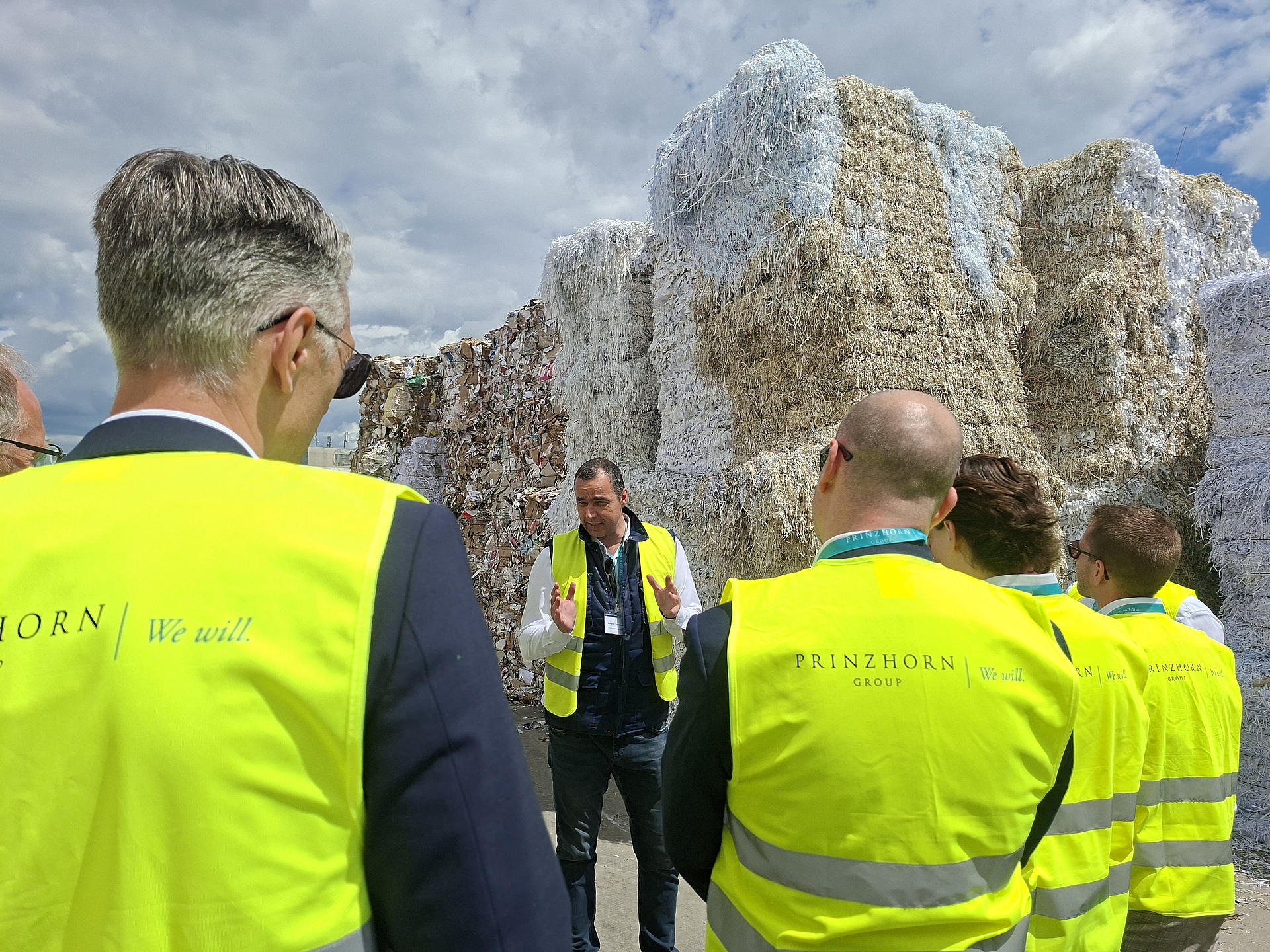
Grade Classification: In Europe, the EN 643 standard is the ultimate benchmark. It classifies paper for recycling into five main groups (ordinary qualities, medium qualities, high qualities, kraft qualities, and special qualities) comprising over 100 specific grades. It strictly defines the permitted percentages of non-paper components (like plastics, metals, or glass) and unusable materials (like moisture-damaged or heavily soiled paper).
Only few decades ago, same quality of PfR was named differently in various markets. For instance, old corrugated containers in Croatia were classified as - 8B class, in Austria - B19, now with EN643 norm in Europe uniform name is 1.04.00. It helps all market participants security in business.

2. Metrology: Ensuring Every Measurement Counts
Metrology provides the physical proof that a shipment matches its contractual and regulatory billing. In the recycling sector, accurate measurement directly impacts pricing and safety.
Mass and Weighing: Industrial weighbridges (truck scales) must be strictly calibrated and verified under legal metrology frameworks. Because price is calculated per metric ton, a minor calibration drift can cause massive financial discrepancies over high-volume corporate shipments.
Moisture and Composition Sensors: Advanced recycling facilities utilize optical sorting systems and calibrated moisture meters. Metrology ensures these sensors are properly calibrated to accurately detect invisible culprits, like excessive moisture deep inside a tightly packed bale, which causes rot and weakens fiber quality.

3. Conformity Assessment: Testing and Verification
Conformity assessment is the active enforcement mechanism—the actual inspection, testing, and certification of the material before it enters the pulper.
Visual and Technical Inspection: Inspectors check incoming bales against standard specifications. They look for prohibited materials (e.g., medical waste, hazardous materials, or food-contaminated pizza boxes) that could ruin an entire batch of pulp.
Laboratory Testing: For higher-grade recycling, labs test for fiber length, ash content, and the presence of adhesives from labels and envelopes that clog paper mill machinery.
Eco-Labeling and Recyclability Certification: Testing bodies assess whether a finished consumer package is actually recyclable within standard paper mill setups, certifying products with labels that assure consumers the material can successfully reintegrate into the Quality Infrastructure framework.
4. Accreditation: Building International Trust
Accreditation is an overarching umbrella that ensures a test report or certificate issued in one country is recognized by a paper mill in another.
Independent Oversight: An accreditation body, such as national accreditation agencies, evaluates the laboratories and inspection firms to guarantee they are technically competent and completely impartial.
Facilitating Global Trade: If a local exporter certifies a shipment of cardboard bales using an accredited lab, global paper mills can accept those quality metrics without needing to re-test the container upon arrival at port.
Conclusion
It’s very easy to “see” Quality Infrastructure Chain in Action, just imagine a shipment of recovered corrugated cardboard (OCC). Standardization sets the limit for maximum moisture at 12%. Metrology ensures the probe used to test the bale is accurate. Conformity Assessment is the act of a technician inserting the probe and logging the data. Accreditation is the official guarantee that the technician's lab knows what it's giving the purchasing paper mill total confidence in the raw material's integrity.
Even though connecting Star Wars, Quality Infrastructure and Paper for Recycling seem to be very difficult, hopefully now you can see that - the Force IS with you, and that Force is called Quality Infrastructure – ultimate unsung hero of the global economy and invisible safety net for international trade!!!
May the Force be with us all!